My journey into entrepreneurship started with something completely different to the normal 9-5.
Risking it all: My path from a failed dream to a successful entrepreneur
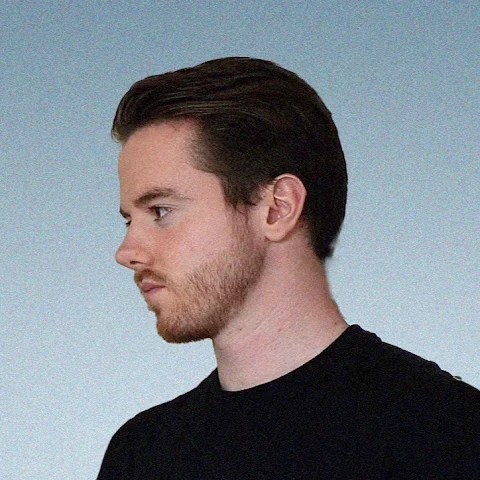 Felix Heikka•6 min read
Table of contents
The army
I had been in the army for five and a half years. Those years taught me a lot and I ended up as an NCO. I always aimed high and wanted to challenge myself, so I set a new goal, a new dream, I was going to become a paratrooper. I was training for years with my new dream in mind. Eventually selection came around and I made it, I was in. Little did I know that getting through selection was only the tip of the iceberg. The actual course was the biggest challenge I had undertaken in my life thus far, and six months into paratrooper training, my dream was shattered. I failed and was dropped from the course.
Just like that, everything I had worked for and dreamed of was gone. But I knew that I didn’t want to just go back to my old ways, so I decided to take a risk and do something completely different with my life.
A new life
David and I had loosely talked about working together sometime in the future, and now, that was suddenly a reality. I got on a plane and left Sweden for Budapest and a new life as an entrepreneur.
In the beginning everything was new, exciting, filled with hope. I was reading books on startups and marketing, trying to learn as much as I could.
I realized it would take a lot of work to succeed, but I severely underestimated the reality of it. In my mind, we were going to put in a couple of hours per day and a few months down the line have a profitable business.
The first project we worked on together was something that David had already built himself. It was a conversational form meant to increase lead conversion.
We put in the time and effort to market it the best we could. We spent week after week trying every marketing method under the sun, but reality was starting to sink in. No one wanted our product.
A tough choice
We had to make a choice if we were going to keep trying or abandon the product and move on.
The thing about talking in hindsight about abandoning a project is that it makes it seem so easy. The lack of demand and the right next steps seem obvious from the vantage point of hindsight. But being there in the moment is a whole other experience. You’re faced with the decision of abandoning the project that has been on your mind every day for the last months, the project you had believed was the one, the one that was going to change everything, the one business idea you had, your one and probably only shot at making it as an entrepreneur.
Abandoning the project meant we were truly taking a step into the unknown, and there was a limit to time as well because we were living off our savings now.
So there I was, four months after leaving the safety of my 9-5, in a foreign country, with minimal entrepreneurial experience, no business idea, burning through savings, and with an end of the runway in sight. The end of the runway meant absolute and total failure for me.
It meant going back to the 9-5 with hat in hand. I'd be coming back to old colleagues as the guy who didn’t make it, the guy who talked big but, as it turned out, didn’t have what it takes. There was nothing special about him, he was just like everyone else. And what was the future for such a guy? I would be stuck in the 9-5 for the rest of my life. A mediocre life was staring at me, waiting for me, at the end of the runway. This was my one shot, my one opportunity. There was only one option available, we had to give this everything we had. So, with my brother by my side, we started walking into the unknown together.
Finding the winning business idea
To find our next product idea, we looked everywhere. During this time we probably came up with every single standard idea that the early-stage entrepreneur does.
We built TinderRoast, which started as a service and ended as an AI roast that would critique men’s dating profiles and help them improve it. It seemed like an idea with potential, but because we were only guessing and going off assumptions, it flopped.
After weeks of building and searching for ideas, we had to stop, look around, and assess the situation. What were we doing wrong? Why did our products fail? Why do products fail? Hm, that’s interesting… why do products fail?
With that question in mind, we started to dive into idea validation. We were reading stories from failed and successful entrepreneurs, learning everything we could from their stories and lessons learned. Pretty much all of them had something in common. There was a reason why failed entrepreneurs failed, and why successful entrepreneurs found success. Many reasons go into it, but the biggest commonality was the importance of idea validation.
Why did so many skip idea validation when it clearly had such a big impact on success? Well, we skipped it because we simply weren’t aware of idea validation as a process, that it was how products were supposed to be built. Some people knew about idea validation but they had problems with the execution of it. This led to the realisation that we could help people validate their ideas, but also, one level above that, we could help people by providing a structure to follow from the absolute beginning of finding an idea, to the goal everyone wanted to achieve of getting their first customers. The structure would follow best practices, lessons from successful and failed entrepreneurs, and lessons from our own experience. This would make sure that people wouldn’t miss critical initial steps such as validating their idea, focusing on solving a real problem, clearly identifying target customers, etc.
This discovery came around the same time when my brother was frustrated with having to constantly remind ChatGPT of the context of our projects to get advice that was actually relevant, so he thought about giving memory to LLMs as a solution. Keep in mind, this didn’t exist in LLMs when we started.
We bounced the ideas back and forth, iterating on them. I remember being in touch with the pain point of building failed products and emphasizing the importance of guiding people through building and always giving actionable steps to remove that feeling of “what do I do next?”
We validated the idea through Reddit, built the MVP in about 30 days, and there was the first version of Buildpad.
We shared our journey building and growing Buildpad with other founders on X and Reddit which helped us a lot with getting early traction. Product Hunt also gave us a good spike in the beginning.
Now
Now we’ve grown Buildpad into something we’re proud of and the results are thousands of users and hundreds of happy customers.
Of course, this is only the beginning. We’re constantly working on Buildpad, improving it every day, because we want to create a great product. A product that people actually want.
Author: Felix Heikka