Why multiple agents
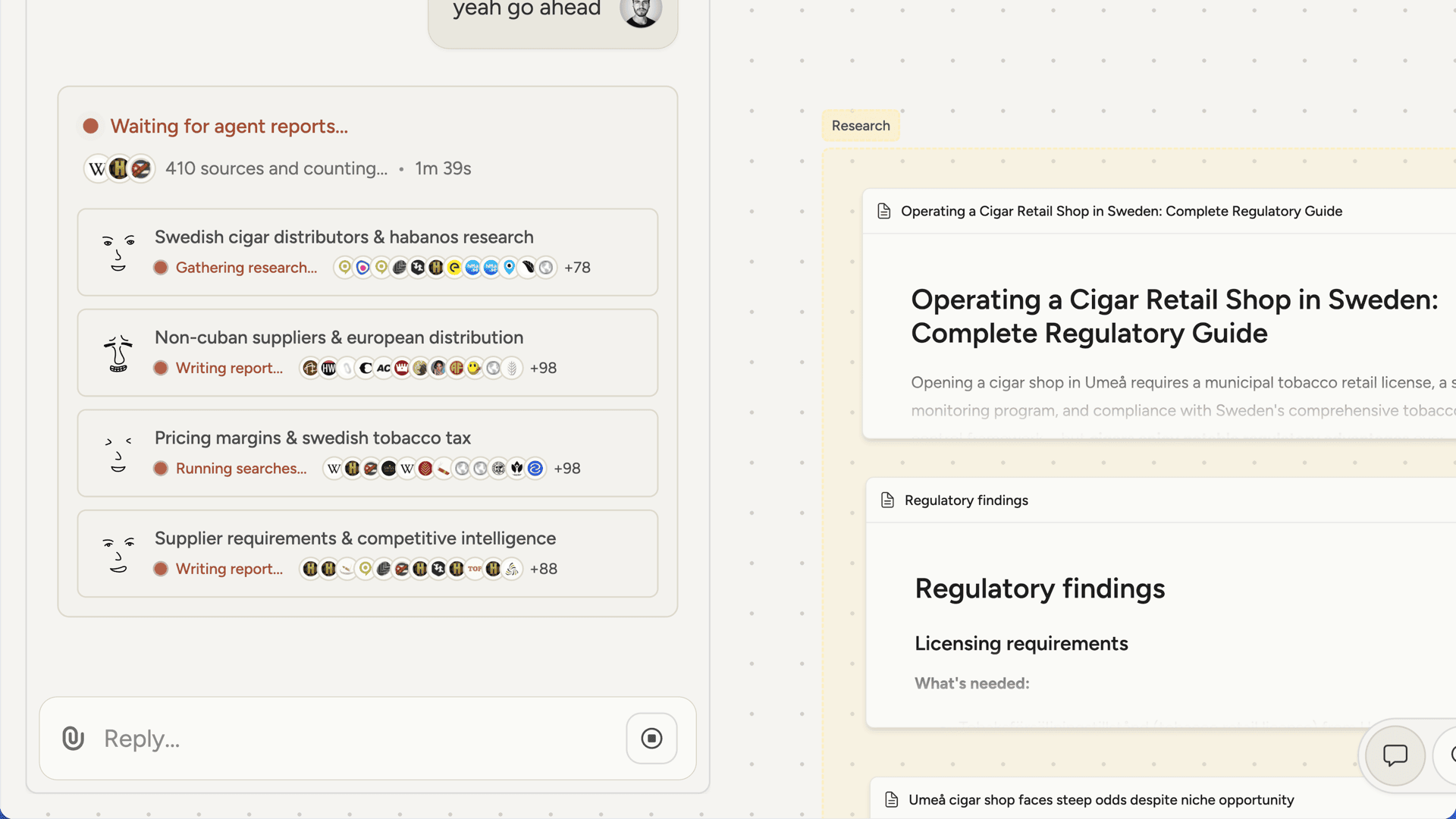
When a single AI tries to research a complex topic, it runs into limits quickly. It can only follow one thread at a time, so it tends to do a few searches, read a few pages, and produce a surface-level summary. The more facets a question has, the worse this gets. The AI has to split its attention across everything at once, and each area gets less depth as a result. Deep research takes a different approach. A lead agent breaks the question down into focused sub-tasks and delegates each one to a dedicated subagent. Each subagent gets its own context and works independently, so it can go deep on its specific area without competing for attention with the others. One subagent might be analyzing competitor pricing models while another is reading through community discussions about pain points in the same space. This parallel architecture means deep research can cover significantly more ground. A typical research task involves multiple agents each performing 5 to 15 searches and page reads, running simultaneously. The result is broader coverage, more sources evaluated, and better source quality assessment since each agent is focused on a narrow scope. The lead agent’s job is strategy and synthesis, not searching. It plans the research, evaluates what comes back, identifies gaps, and decides whether to deploy more agents or write the final report. This separation of concerns produces better results than a single agent trying to do everything.How it works
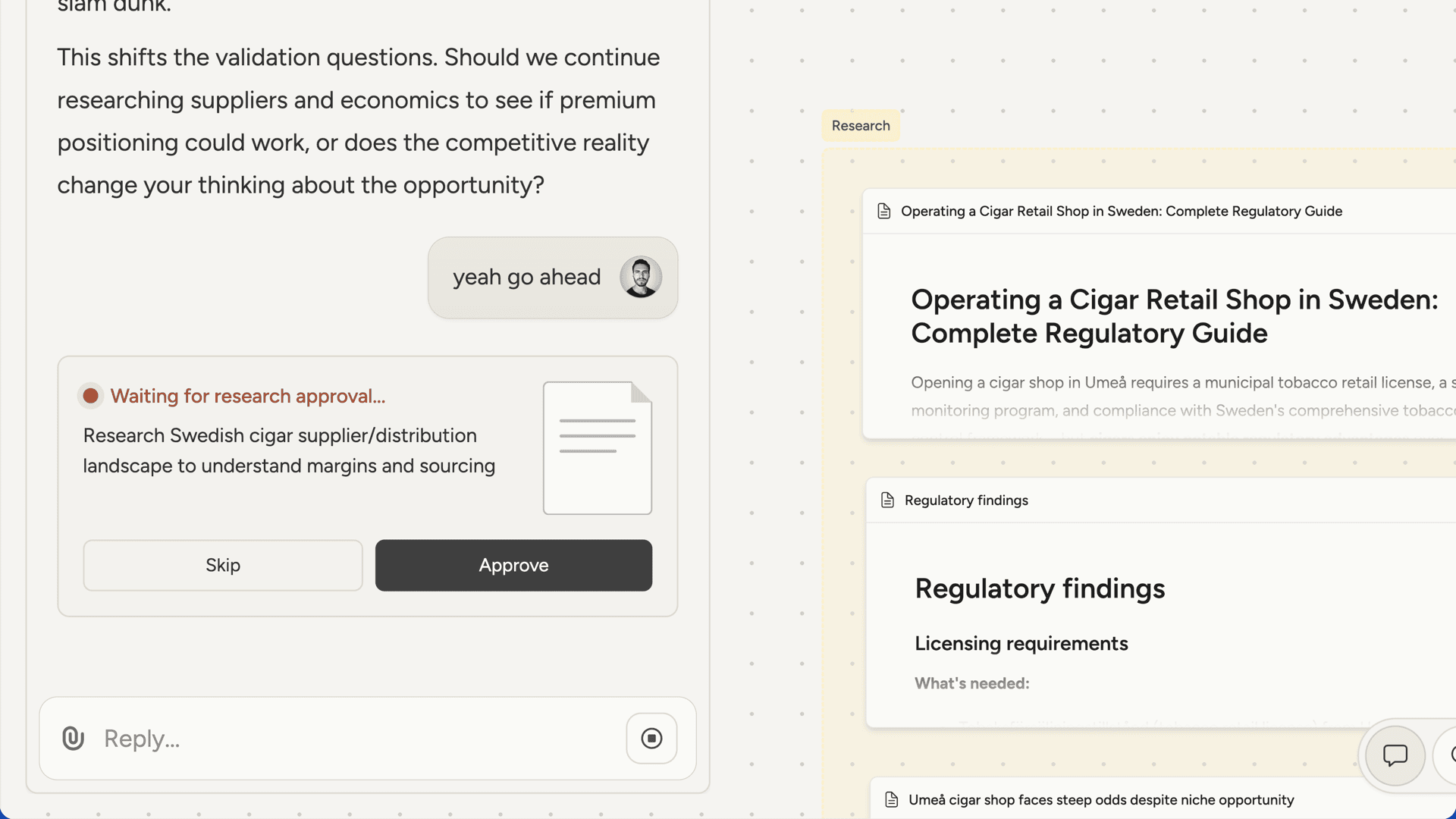
When your AI cofounder determines that a question needs thorough research, it proposes a research task. You’ll see a summary of what it plans to investigate and can choose to approve or skip. Once approved, the system works in three stages:- A lead agent plans the research. It analyzes your question, determines whether it needs depth (multiple perspectives on one topic), breadth (many distinct sub-questions), or a focused investigation, and creates a research plan.
- Subagents research in parallel. The lead agent delegates specific tasks to specialized subagents. Each subagent independently searches the web and social media, reads full pages, evaluates source quality, and compiles its findings. Depending on the complexity of your question, anywhere from 1 to 20 subagents may run simultaneously.
- The lead agent reviews and synthesizes. Once the subagents complete their work, the lead agent reviews all findings and assesses whether the research is sufficient. If there are gaps or areas that need more depth, it spawns additional subagents to investigate further. When it’s satisfied with the coverage, it resolves any conflicting information and writes a comprehensive report. A separate citations agent then verifies claims against source material and adds inline citations throughout.
Source quality and citations
Each subagent is trained to evaluate the sources it encounters. It distinguishes between original sources and aggregators, flags speculation or marketing language, and prioritizes recent, high-quality information. When multiple sources conflict, the lead agent applies its own judgment based on recency, consistency, and source reliability. The final report includes inline citations so you can trace any claim back to its source. These are added by a dedicated citations agent that cross-references the report against the raw source material to ensure accuracy.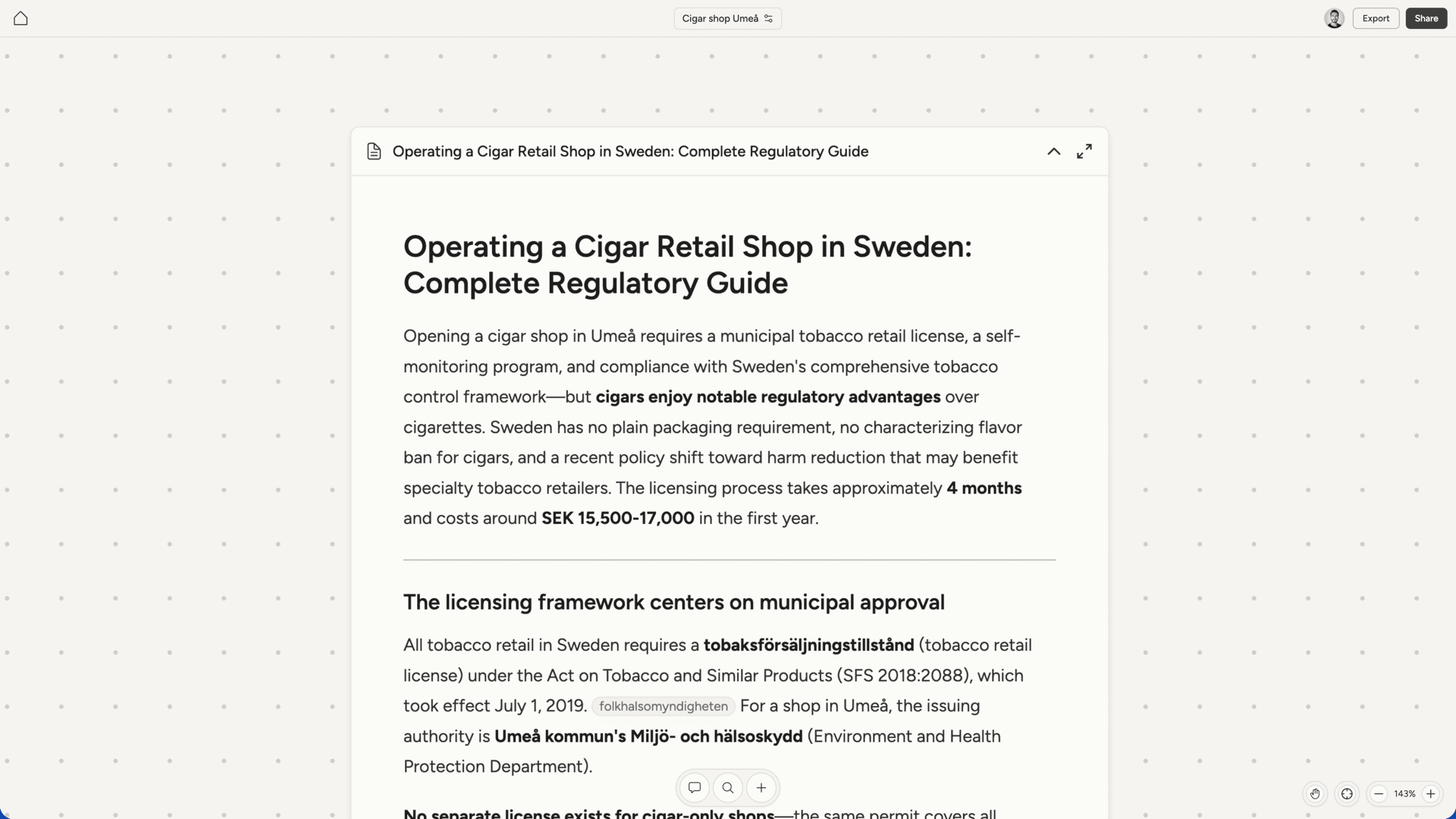
When to use deep research
Your AI cofounder has access to both quick web searches and deep research, and will choose the right tool based on your question. Quick web search is used for simple lookups: checking a competitor’s pricing, verifying a fact, or looking up what a term means. Deep research is used when a question requires real exploration. Some examples:- Comprehensive competitor analysis across an industry
- Understanding the regulatory landscape for a specific business in a specific location
- Evaluating sourcing and manufacturing options for a physical product
- Mapping out a market to understand who the players are and where the gaps exist
- Exploring a technical domain to inform architecture decisions
The approval flow
Deep research uses more credits than a regular message because of the number of AI agents involved. Before research begins, you’ll see a card with:- A description of what the AI plans to research
- Approve to start the research
- Skip to continue the conversation without researching
Working with research findings
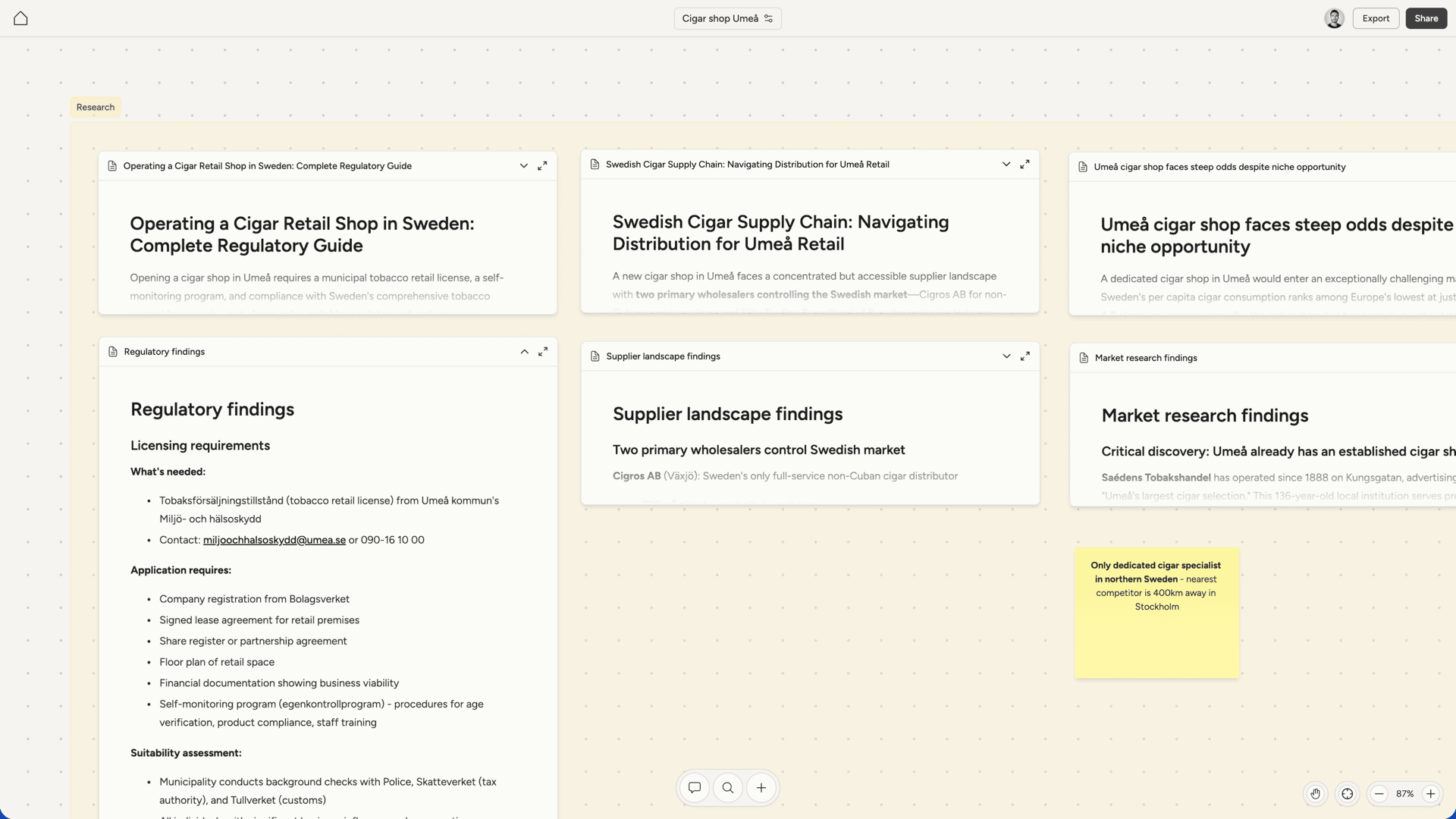
When research completes, the full report is added as a document on your canvas. Your AI cofounder then reads the report, distills the key insights, and captures the most important findings by creating new documents or updating existing ones on the canvas. This means the knowledge from research doesn’t just live in the chat. It becomes part of your project’s persistent workspace where it can inform future decisions. After processing the findings, your AI cofounder will discuss what they mean for your project and suggest a concrete next step. This might be another research task to go deeper on something the report surfaced, or it might be time to start making decisions based on what you’ve learned. Each research task is focused on one specific topic rather than trying to cover everything at once. This keeps reports focused and actionable, and lets you build up a body of research over time as your project evolves.